Use a seller visit to gather questions and observations, then arrange the professional work needed to answer them. Bring a notebook or phone, request permission before photographing anything, and decide in advance which systems require an inspector. This checklist cannot certify an RV’s safety or replace a qualified inspection.
Before the visit: request access and records
Ask for the VIN, model information, known faults, service history, and modification records. Confirm who will be present and whether appropriate hookups will be available for a professional demonstration. Request access to ordinary storage compartments and the living area without asking the seller to remove covers or dismantle equipment.
Check NHTSA’s recall resources and ask the manufacturer about applicable campaigns and completed repairs. The VIN lookup omits some small manufacturers, older recalls, and other categories. A result showing no open recalls is not a complete vehicle history; use make-and-model or equipment searches where appropriate.
At the camper: record what you can safely observe
Compare the identification labels with the paperwork. From ground level, look at accessible body panels, doors, windows, seams, and compartments. Inside, note odors, staining, damaged surfaces, and flooring that feels soft during normal walking. Record the location and the seller’s explanation without treating that explanation as a diagnosis.
Leave roof access, underbody work, and structural investigation to qualified professionals. Airstream’s leak guidance explains that water may emerge away from its entry point. A mark on a wall is a reason to investigate, not a reliable map of the damage.
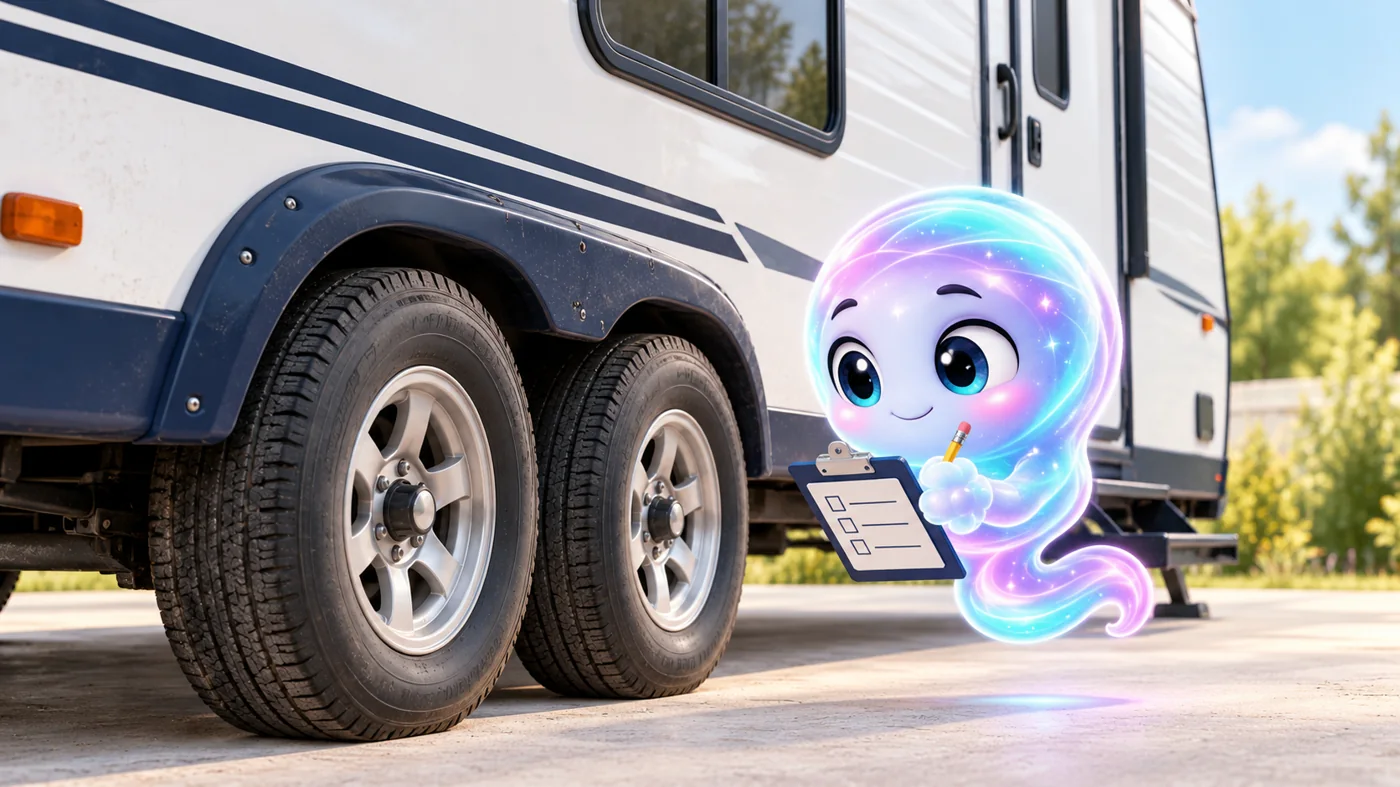
Before movement: flag tire and running-gear concerns
Observe accessible tires, including the spare, for bulges, cracks, irregular wear, or obvious damage. Record date codes you can read without crawling underneath. Ask a technician to assess suitability and inspect the brakes, bearings, suspension, and coupling or hitch as applicable. Do not attempt an informal brake test.
NHTSA identifies infrequent use as a tire-aging concern, including for recreational vehicles. Have questionable tires evaluated before towing or driving. For a motorhome, confirm whether the engine, drivetrain, and chassis require a separate specialist appointment.
During demonstrations: keep a tested and untested list
Let the seller and inspector establish safe testing conditions under the manufacturer’s procedures. Log which appliances, plumbing fixtures, slide-outs, heating and cooling equipment, and alarms were demonstrated. Write down unavailable hookups and other reasons a test could not happen.
Do not open electrical panels, handle exposed wiring, bypass safeguards, or improvise connections. Propane leak testing and electrical diagnostics belong with qualified professionals; these are among the specialized checks described in the NRVIA inspection standards.
If propane odor or a propane alarm suggests a leak, get everyone away immediately. Avoid operating switches and appliances. From a safe location, call 911 or the fire department. Stay away until a qualified responder clears the area, and have the system checked before reuse, following Propane Education & Research Council guidance. Stop the visit and move away from suspected electrical hazards too.
When booking: agree on the inspection’s limits
Request the contract, points of inspection, and a sample report, as advised by NRVIA’s consumer checklist. Ask how inaccessible spaces and untested equipment will be reported. NRVIA’s standards cover accessible areas at the inspection time and do not provide a warranty of future performance.
Afterward: resolve the open questions
Make a follow-up list with the concern, the evidence still needed, and who will provide it. Keep safety issues separate from cosmetic preferences. Ask for repair findings and quotes where appropriate; do not mark an item resolved merely because it appeared in the report. The guide to evidence behind camper value helps you organize the resulting records before reconsidering the price.
Your visit checklist
Use these as conversation prompts. Ticking a box does not certify condition or safety. Checks are temporary and reset when this page reloads.
0 of 5 items checked
Sources and references
- NHTSA: Check for recalls
Recall search methods and important VIN-lookup coverage limits. - Airstream: What to do if your Airstream has an exterior leak
Water can travel away from a leak entry point. - NHTSA: Tire safety and aging
Tire aging; low use does not eliminate age-related concerns. - NRVIA: What consumers need to know
Request inspection scope, points of inspection, contract, and sample report. - NRVIA: Standards of Practice
Accessible-area scope, exclusions, uninspected-item reporting, specialized electrical and propane checks, and no future-performance warranty. - Propane Education & Research Council: Important propane safety information
Suspected propane leaks and detector alarms require immediate evacuation, avoidance of sparks and electrical switches, reporting from a safe location, and professional clearance and system checks before return or reuse.
Sources checked October 18, 2026. Practical comparison prompts are CamperWorth’s editorial guidance. Source organizations and pictured vehicles do not endorse CamperWorth.
Produced by CamperWorth A.I · AI-assisted educational content. This guide is not a certified appraisal, a purchase offer, a safety certification, or a substitute for qualified professional advice. Sources and editorial policy.